Experience Systems · Experience Strategy
Making an invisible system
visible.
The environment gave visitors a way to understand an agentic security system through movement, rhythm, and response.
Format
Brand Environment · AI Café
Context
RSAC 2026 · Booth S-1143 · San Francisco
My role
Experience Strategy · Narrative Architecture
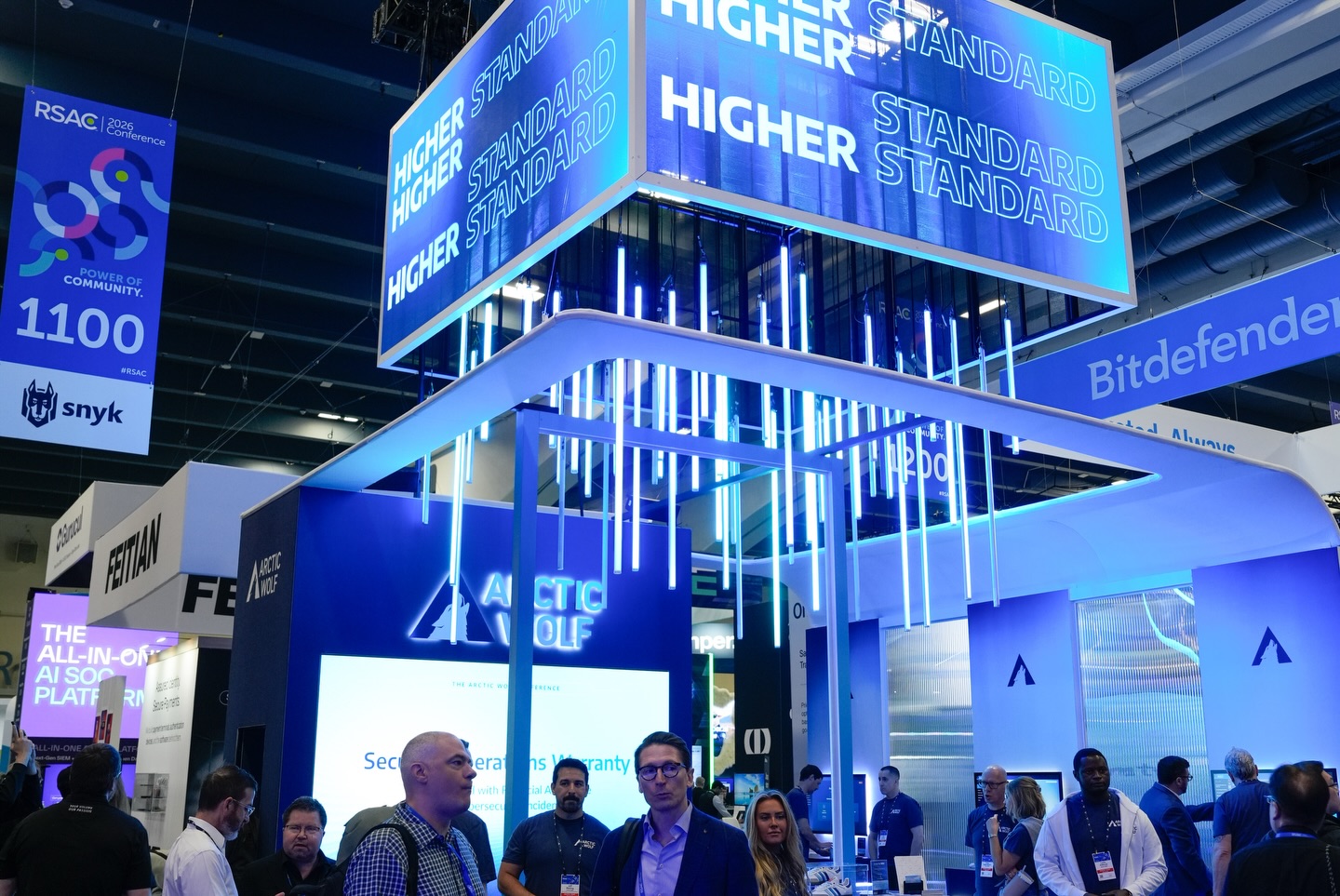 RSAC 2026 · Moscone Center, San Francisco
What I owned
The strategic question and the Detect, Interpret, Respond architecture behind every design decision, developed with a fellow creative strategist.
What it guided
How the perimeter displays, demo stations, overhead light, and AI Café behaved and where each one sat.
Who used it
Our 3D designer, who built the booth from it, and two account leads and a sales lead, who used it to guide client decisions.
Team
One of two creative strategists on a six-person core team.
Make the booth behave like the system.
Arctic Wolf's Aurora Agentic SOC runs continuously beneath the surface: hundreds of autonomous agents, real-time telemetry, and an AI Trust Engine behind every security decision. None of it is visible. The environment had to make it felt in the few seconds a visitor gives a booth on a crowded show floor.
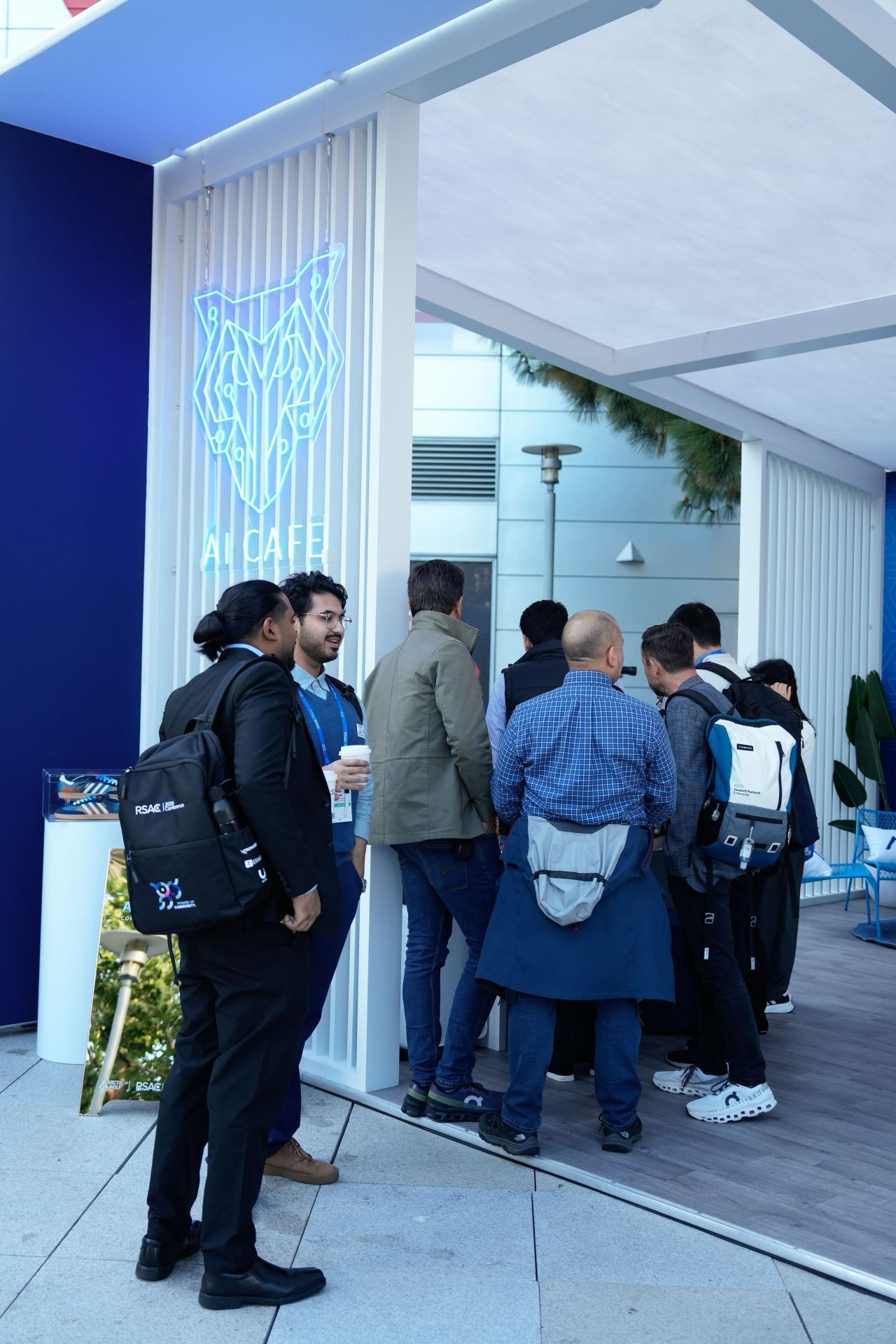
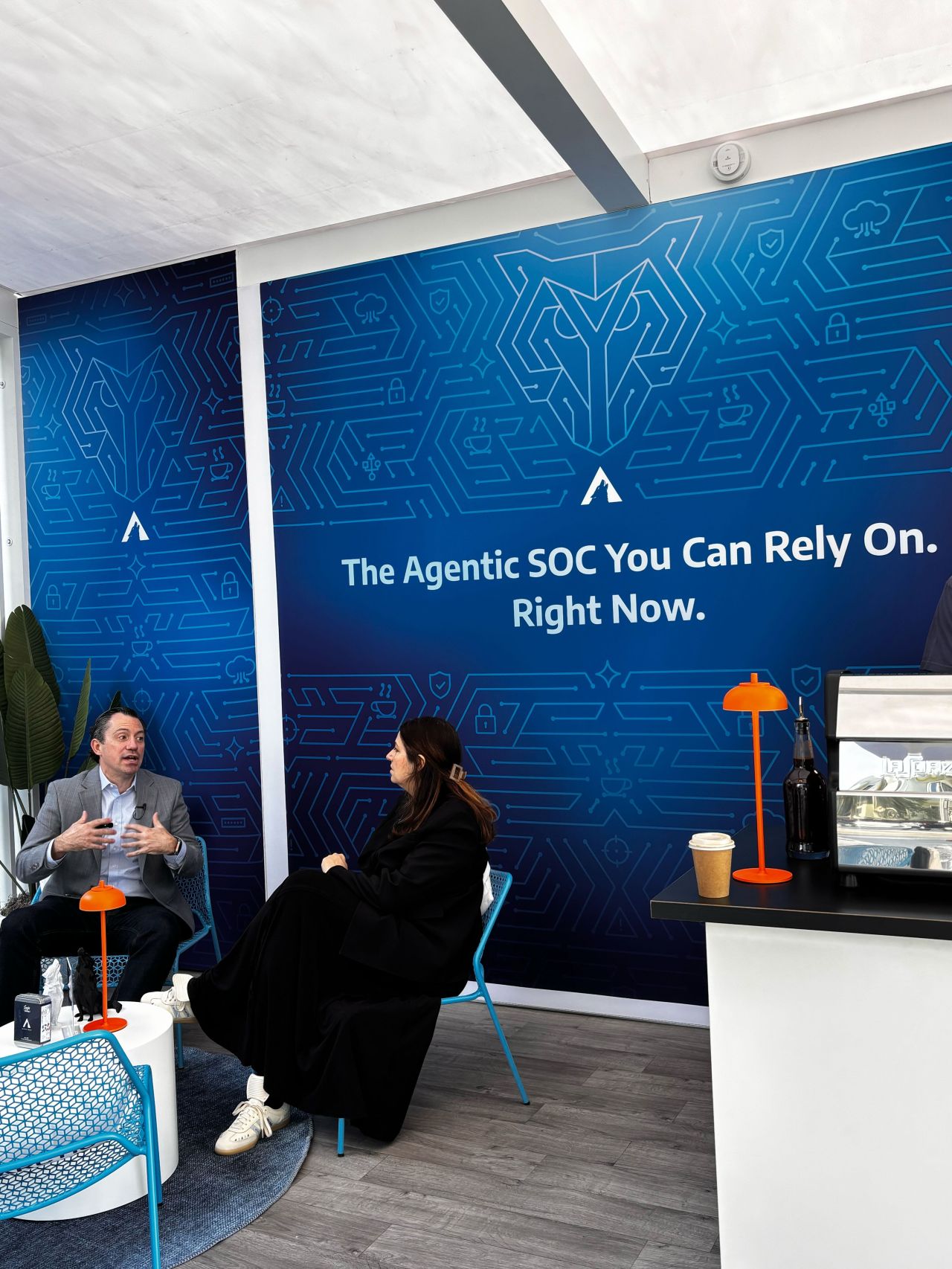
The system is continuous, ambient, and responsive, so the space was designed to behave the same way. Movement replaced explanation, and rhythm replaced signage.
Detection and response cycles played out across large-scale perimeter displays. Overhead light introduced pacing, a subtle pulse that made the space feel alive without demanding attention. Adjacent to the main floor, the AI Café shifted the visit from understanding to conversation.
The main floor and the AI Café were two environments built on one architecture.
-
Translate system behavior into spatial behavior.
Detection, interpretation, and response became the sequence a visitor walks through, so the space explains the product before anyone speaks.
-
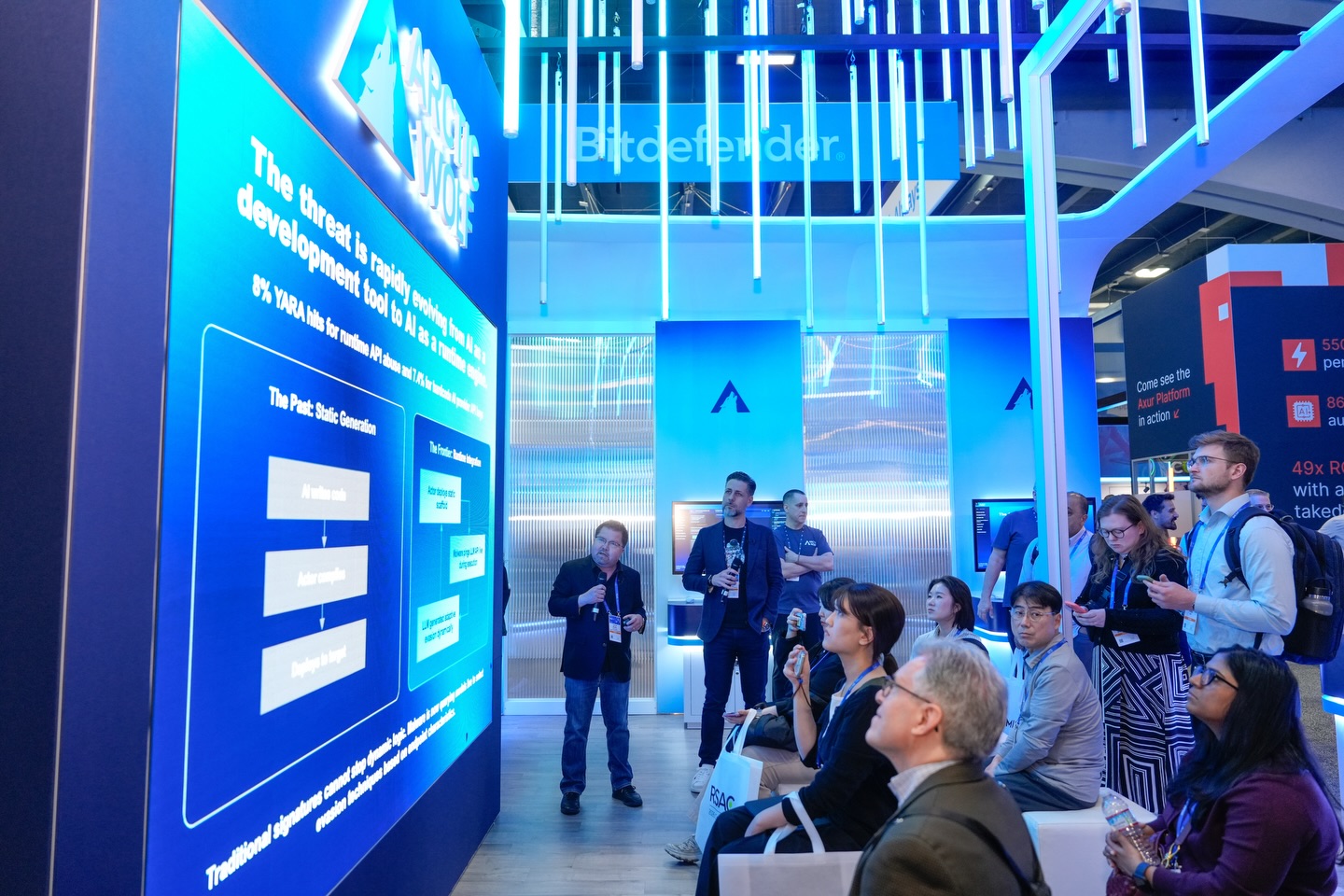
Put the demos inside the flow.
Demo stations sit along the path through the booth, turning a passive moment of watching into a natural next step.
-
Use light as pacing.
A slow overhead pulse carries the feeling of a system that is always on, with motion that holds attention without competing for it.
-
Give conversation its own room.
The AI Café separates peer-level discussion from the show floor, where it can happen once someone already understands what they are looking at.
One question unified every decision: How do you make invisible intelligence spatially legible? The answer mirrored the platform's own logic.
Ambient signal
Intelligence made visible
Peer conversation, trust built
Experience architecture · Detect → Interpret → Respond · Moscone Center, San Francisco, 2026
The booth translated autonomous system behavior into spatial behavior.
The environment explained the platform before anyone did.
Before a conversation began, visitors could read the system's behavior in the space itself.
In its RSAC 2026 wrap-up, Arctic Wolf described the booth as “a central hub for conversations about operationalizing trusted AI in cybersecurity,” with a presence that “consistently drew standing-room-only engagement across technical sessions and executive discussions.”