Environmental Storytelling · Experience Strategy
Edmund de Waal
Format
Multi-site Exhibition
Context
The Eight Directions of the Wind · The Huntington, 2025
My role
Experience Architecture · Evaluation Strategy
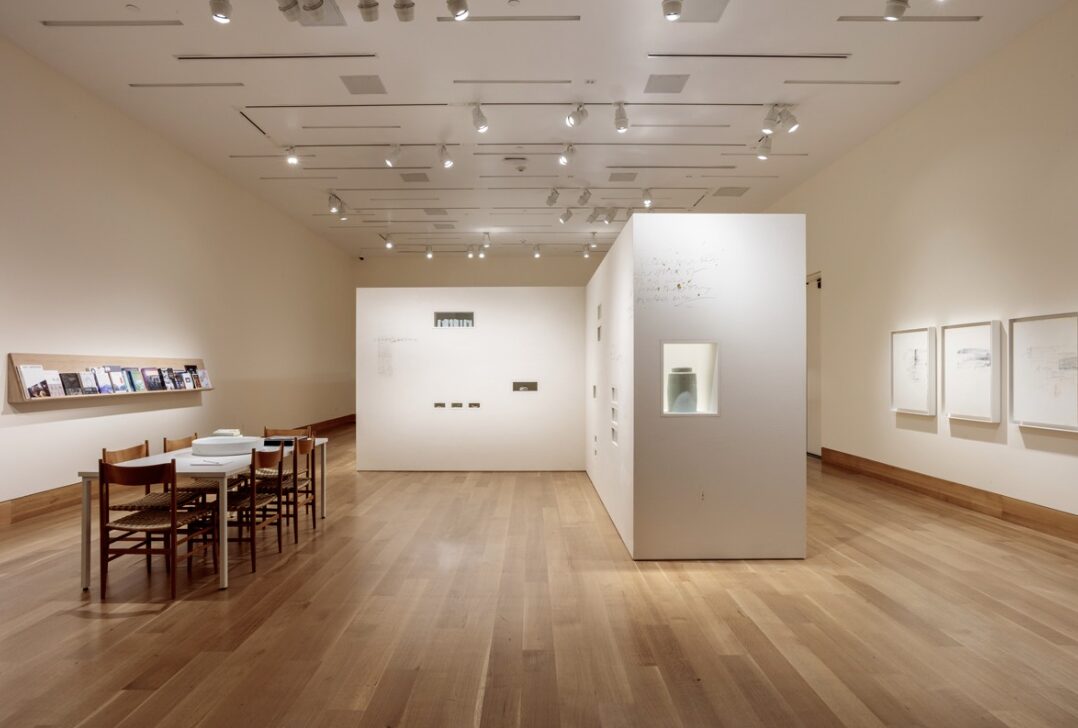 © Edmund de Waal. Photo: Josh White, courtesy The Huntington
The Eight Directions of the Wind unfolded across three environments: the Art Gallery, the Chinese Garden, the Japanese Garden. Each with its own pace, its own cultural associations, its own relationship to time.
How do you create the conditions for people to slow down and truly pay attention?
My role was to build an evaluation framework upstream, before design decisions were finalized, before the institution had locked in its approach: defining what a successful experience would feel like, and how the institution would know when it was happening.
Most evaluation enters after an exhibition opens. This one was embedded into planning while decisions were still being made.
Working across curatorial, education, and leadership teams, I translated Edmund de Waal's thematic intent into shared institutional goals.
Because the framework was developed before key exhibition decisions were finalized, it shaped the experience as it unfolded. It became a shared decision-making tool, helping teams align programming, interpretation, and visitor experience around the same definition of success.
The central design question: how do you protect curatorial intent across three environments with entirely different pacing, materials, and cultural contexts?
The multi-site structure was inherent to the work. De Waal's themes of migration, material memory, and belonging needed room to play out differently across each environment. The framework had to hold continuity without flattening difference.
Three sites, one framework · The Eight Directions of the Wind · The Huntington, 2025
Evaluation as infrastructure, embedded from the start.
Visitors
Emotional resonance around migration and belonging.
Slow looking and personal reflection across three environments.
Institution
Audience diversification across communities and languages.
Positioned as a site for innovative, dialogic contemporary art.


Observation methods changed with each environment. Conversation remained intentionally open, allowing visitors to construct their own meaning.
Programming was treated as experience in its own right. What happened in the galleries, gardens, and around the artist talks was all part of the same system.
Observation methods · The Eight Directions of the Wind · The Huntington, 2025

The Eight Directions of the Wind · The Huntington · Courtesy of The Huntington Library, Art Museum, and Botanical Gardens. Images shown are from the realized exhibition and are included for contextual reference.
The framework protected the experience it was designed to measure.
Because evaluation was embedded early, it influenced decisions that would otherwise have been made on intuition alone: how the three sites were sequenced, how programming was integrated, how visitor goals were balanced against institutional ones.
Experience strategy begins before an exhibition opens. Sometimes the most important decision is defining what success should feel like before anyone starts designing toward it.